Home / How it works / ACES and PIES in Odoo
ACES and PIES, running inside Odoo
PartsOps AI adds ACES fitment (which vehicles a part fits) and PIES product data (what the part is) to Odoo, which has neither as standard. Both live in the same database as your stock, prices and orders, so the counter, web store and marketplaces sell from one set of data, with no separate PIM.
Send us a sample of your ACES or PIES file, or just tell us where your fitment lives today. We'll show how it would load into Odoo.
 Updated by Devang Mehta, co-founder, Aktiv Software


- VCdb


- ShowMeTheParts
Why ACES and PIES don't fit standard Odoo
Odoo was built for general commerce and manufacturing. It knows products, variants and attributes. It has no concept of a vehicle application, a fitment qualifier or the thousands of extended PIES attributes brands publish.
| Industry standard | What it holds | In standard Odoo |
|---|---|---|
| ACES | Vehicle applications: year, make, model, submodel, engine, position and qualifiers such as "4WD only" | Nothing. No vehicle model at all. |
| PIES | Product data: descriptions, dimensions, weights, images, prices, packaging and extended attributes | Basic product fields only. No PIES structure. |
| Reference databases | The industry's vehicle, part-type and qualifier tables that ACES records point to | Not present |
Four design decisions that keep it fast and clean
Most problems with parts data in an ERP show up six months after go-live. These choices prevent them.
1. Fitment in its own table, not variants
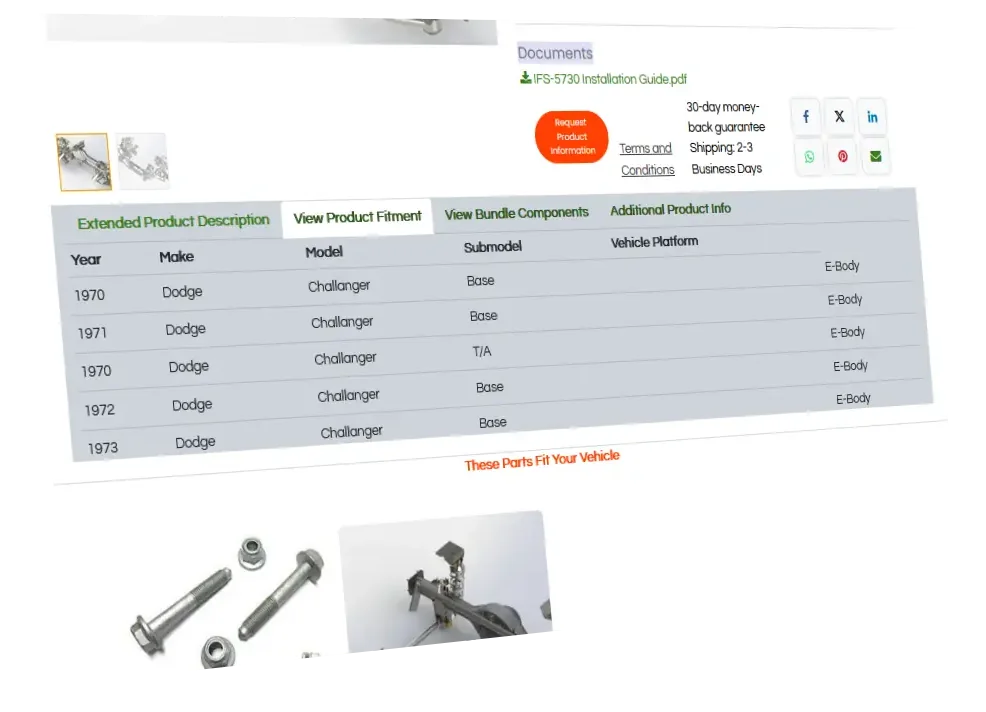
One part can fit a thousand vehicles. Each application is a row that points to the product, so the catalog stays one product per part and stock and pricing keep working.
2. Core PIES on the product, extended PIES beside it
Part number, brand, UPC and dimensions map to Odoo's own product fields. Category-specific extended attributes live in a linked model, keyed so they line up across brands.
3. Data kept local, refreshed from source
Fitment lives in your Odoo database, so every search, cart and order checks it instantly, which is how you cut wrong-fit returns. Scheduled imports keep it current with your suppliers.
4. Qualifiers as data, not notes
"With 5.3L engine" or "excludes heavy duty" is stored as a field you can filter on, not a line of text that nobody reads until the part comes back. Seven fitment mistakes that cause returns.
The fitment model, field by field
Vehicle
Year, make, model and submodel, plus placement (front, rear, left, right) and drive type.
Platform search
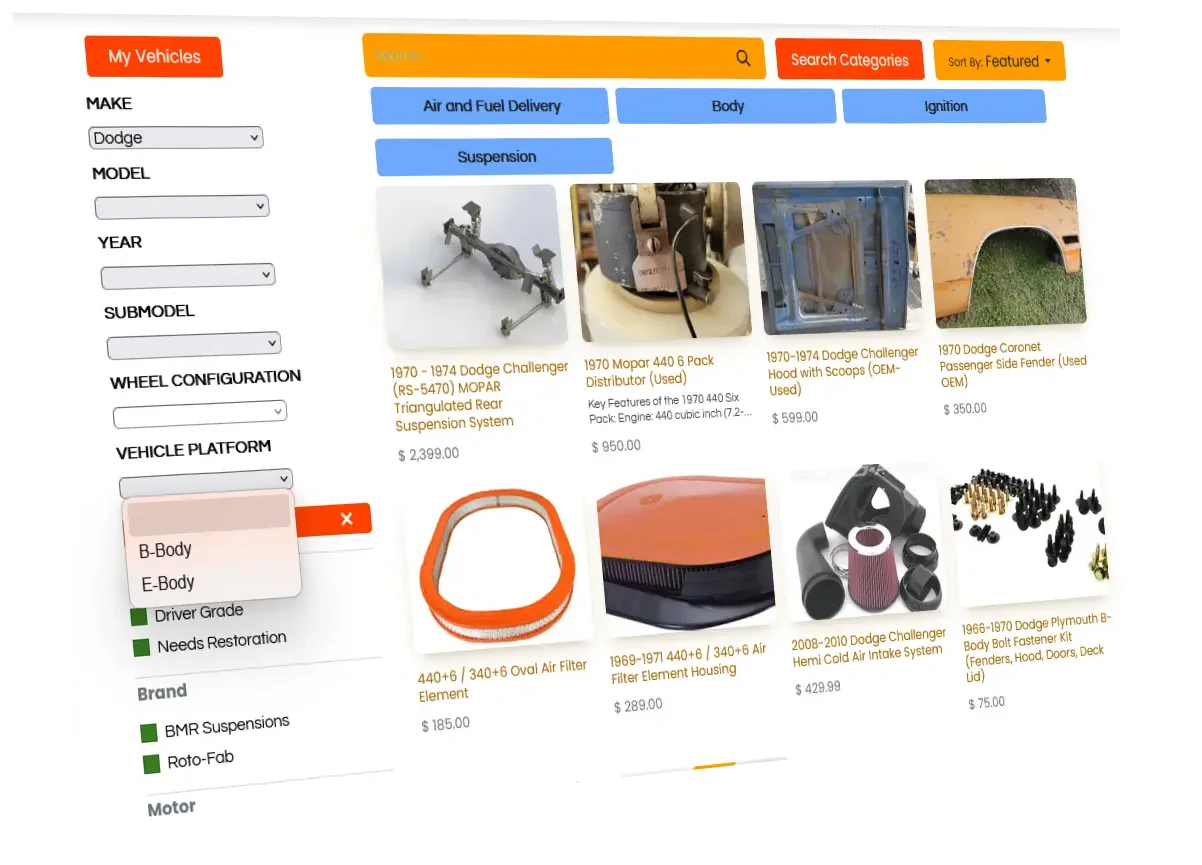
Search by body or platform code, such as E-Body, B-Body or F-Body, as well as by model.
Qualifiers
Engine, transmission, body style, brakes, color, location and condition.
Ready to map
More than 19,000 year, make and model combinations, with PIES categories built in.
Your own vehicles
Add vehicles and year ranges the standard tables miss, such as 1966–72.
Per brand or website
Use brand-name data or your own, and run different fitment views for different websites or companies.
Data in, data out
| Job | How it works |
|---|---|
| Load supplier ACES | Live API connections to Turn 14 Distribution, SEMA Data and ShowMeTheParts. Other suppliers' files by API, FTP or Excel through Catalog Sync. |
| Load supplier PIES | Descriptions, dimensions, images, prices and attributes onto the Odoo product record |
| Publish your brand data | PIES export for SEMA Data, built from the records you sell from |
| Keep it current | Scheduled updates that load only what changed |
| Keep it clean | Fitment mapping and data-quality checks, by our team or yours. Try the free Fitment Health Check on your own file. |
Where the fitment gets used
Loading ACES is half the job. The payoff comes when every channel checks it.
Automotive storefront
Shoppers pick their vehicle and see only parts that fit. See the storefront
Counter and quotes
The same vehicle filters inside Odoo sales orders and quotations, for distributors and repair shops.
Marketplaces
Listings for Amazon, eBay and Shopify built from the same fitment, so titles and fitment tables agree. Odoo for online sellers.
AI checks
AI flags listings where the title, fitment and specs disagree, before a customer buys the wrong part. How AI works in Odoo
ACES and PIES questions
Does Odoo support ACES and PIES out of the box?
No. Standard Odoo has products, variants and attributes, but no idea which vehicles a part fits and no PIES attribute model. Our Fitment, PartSync and Catalog Sync modules add both, inside the same Odoo database as your stock, orders and accounting.
Should ACES applications be stored as Odoo product variants?
No. One part can fit hundreds or thousands of vehicles. Modelling each application as a variant explodes the catalog and breaks inventory and pricing. Fitment belongs in its own table that points to the product.
Can we export PIES data to SEMA Data?
Yes. PIES product data can be exported in the format SEMA Data expects, built from the same Odoo records you sell from, so your brand data and your catalog never drift apart. Manufacturers: see Odoo for parts manufacturers.
Where does the ACES and PIES data come from?
From your suppliers and data sources. We have live API connections to Turn 14 Distribution, SEMA Data and ShowMeTheParts, and Catalog Sync loads other suppliers' ACES and PIES files by API, FTP or Excel.
What if our vehicles are not in the VCdb?
You can add your own vehicles, platforms and year ranges, such as 1966–72, alongside more than 19,000 year, make and model combinations that are ready to map. That suits classic, restomod, off-road and non-U.S. vehicles.
How often should ACES and PIES data be refreshed?
As often as your sources change. Most brands publish monthly or quarterly. Scheduled imports that only load what changed keep Odoo current without slowing it down.
Looking at options? Talk it through with us.
No pitch. If Odoo isn't the right fit for you, we'll say so. Already have a quote from someone else? Get a free second opinion.
“Your request comes straight to me. We reply within one business day.”
Devang Mehta, co-founder, Aktiv Software
Prefer to call? +1 848 219 9238 · U.S. sales, Coppell, Texas